 В Атырау +16.8
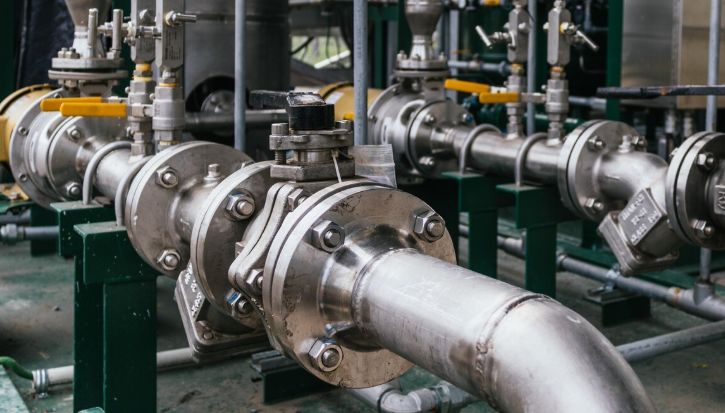
Deputy Minister of National Economy Asan Darbayev reported at the Government session on the progress of the implementation of the National Project “Modernization of the Energy and Utility Sectors.”
He noted that the National Project “Modernization of the Energy and Utility Sectors” was developed and adopted on the instruction of the Head of State. Its main goal is the gradual reduction of the wear level of engineering infrastructure, increasing the reliability of energy supply systems, and improving the quality of utility services provided to the population.
“In 2025, the institutional framework for the implementation of the project was fully formed. In this direction, the necessary legislative changes in the areas of budget, construction, and regional development were adopted. In addition, an Electronic Platform was put into operation for the implementation of the National Project. The implementation of the National Project covers 247 natural monopoly entities. By 2029, it is planned to remove 70 utility enterprises from the high-risk crisis zone, while the share of enterprises with sustainable infrastructure should amount to about two-thirds,” Asan Darbayev emphasized.
The total volume of investments for the implementation of the National Project in 2025–2029 will amount to 13 trillion tenge, of which 6.8 trillion tenge is planned to be directed to the utility sector and 6.2 trillion tenge to the energy sector.
With these funds, 84 thousand km of engineering networks will be repaired and modernized, energy sources with a total capacity of 7,309 MW will be put into operation, and 27 generation facilities will be constructed and modernized. As a result, the average level of wear of engineering infrastructure across the country is expected to decrease to 40%, and the accident rate at facilities will be reduced by 25%.
“The volume of financing for housing and communal services in 2026 has been doubled compared to 2025. This clearly confirms the effectiveness of the new mechanisms provided for by the National Project. Private and foreign investments have been attracted for the implementation of the project. The total volume of borrowed funds approved for 2026 amounts to 625 billion tenge. Financing is carried out with the participation of six leading international financial institutions," the Deputy Minister noted.
He added that the implementation of these measures makes it possible to attract long-term financial resources at a low cost, which contributes to reducing the burden on the cost of utility services. In 2025, financing totaling 31.7 billion tenge was attracted.
The management of the implementation of the National Project is carried out through the Electronic Platform, where all stages of implementation are reflected in real time and in an open format, and the main business processes are digitalized. In addition, the introduction of two modules of the unified digital platform for housing and communal services Smart Turmys continues.
In 2025, with financing of 547 billion tenge, 6.6 thousand km of engineering networks were repaired, and 8 enterprises were removed from the high-risk zone (“red zone”).
This year, the repair of 12 thousand km of engineering networks is planned with financing of 1.1 trillion tenge. Of this amount, 759 billion tenge is directed to the financing of construction works. For projects worth 379 billion tenge for which EPC contractors have been determined, the development of design and estimate documentation and the procurement of materials from domestic commodity producers are underway. In 2026, it is also planned to remove another 8 enterprises from the category of facilities with a critically high level of wear to the category with an average level of wear.
At all stages of the implementation of the National Project, from design to the commissioning of facilities, priority is given to the use of products of domestic commodity producers. For these purposes, by 2029 a need for products amounting to about 2 trillion tenge has been determined, and 492 domestic commodity producers are registered on the E-Ondiris platform. By the end of the current year, work will also continue on automating the process of assigning housing assistance to low-income families.
Separately, the Deputy Minister reported on the situation in specific sectors of the utility sphere. Since the beginning of the implementation of the National Project, 533 billion tenge of investments have been attracted to the heat supply sector. Last year, 259 km of heating networks were repaired; this year, it is planned to repair another 336 km. As a result, the average level of wear of heating networks will decrease from 52% to 48%, the accident rate will be reduced by 7.2%, and heat energy losses by 1.6%. In addition, the number of natural monopoly entities with a critically high level of wear will decrease by four enterprises. As an example of the full implementation of projects, the speaker noted the reconstruction of main heating networks in the cities of Pavlodar and Temirtau, as well as ongoing works in the city of Uralsk.
In the power supply sector, the repair of 15.8 km of electrical networks is envisaged. Based on the results of two years of project implementation, the average level of wear of electrical networks will decrease from 67% to 62%, the accident rate will be reduced by 3.9%, and electric energy losses by 0.6%. As a result, the number of enterprises with a critically high level of wear will decrease by one enterprise.
In the water supply sector, it is planned to carry out the repair of about 1.5 thousand km of engineering networks with the attraction of 154 billion tenge of investments. As a result of the implementation of the projects, the average level of wear of the networks will decrease from 39% to 36%, the accident rate will be reduced by 4%, and water losses will decrease by 1.2%. The number of enterprises with a critically high level of wear will decrease by six.
“The most difficult situation with the level of infrastructure wear remains in the wastewater sector. In this sector, it is planned to repair 803 km of networks, with the volume of investments amounting to 94 billion tenge. Based on the results of 2025–2026, the average level of wear of the networks will decrease from 55% to 52%, and the accident rate will be reduced by 2.5%. As a result, the number of enterprises with a critically high level of wear will decrease by three,” Asan Darbayev reported.
According to the Deputy Minister, the institutional and financial foundation of the National Project has been fully formed. The first year of implementation confirmed the effectiveness of all seven financing mechanisms, as well as the digital project management system. The main task for 2026 is the transition from the preparatory stage to large-scale construction and installation works and a twofold increase in the volumes of repair of engineering networks.