 В Атырау +21.3
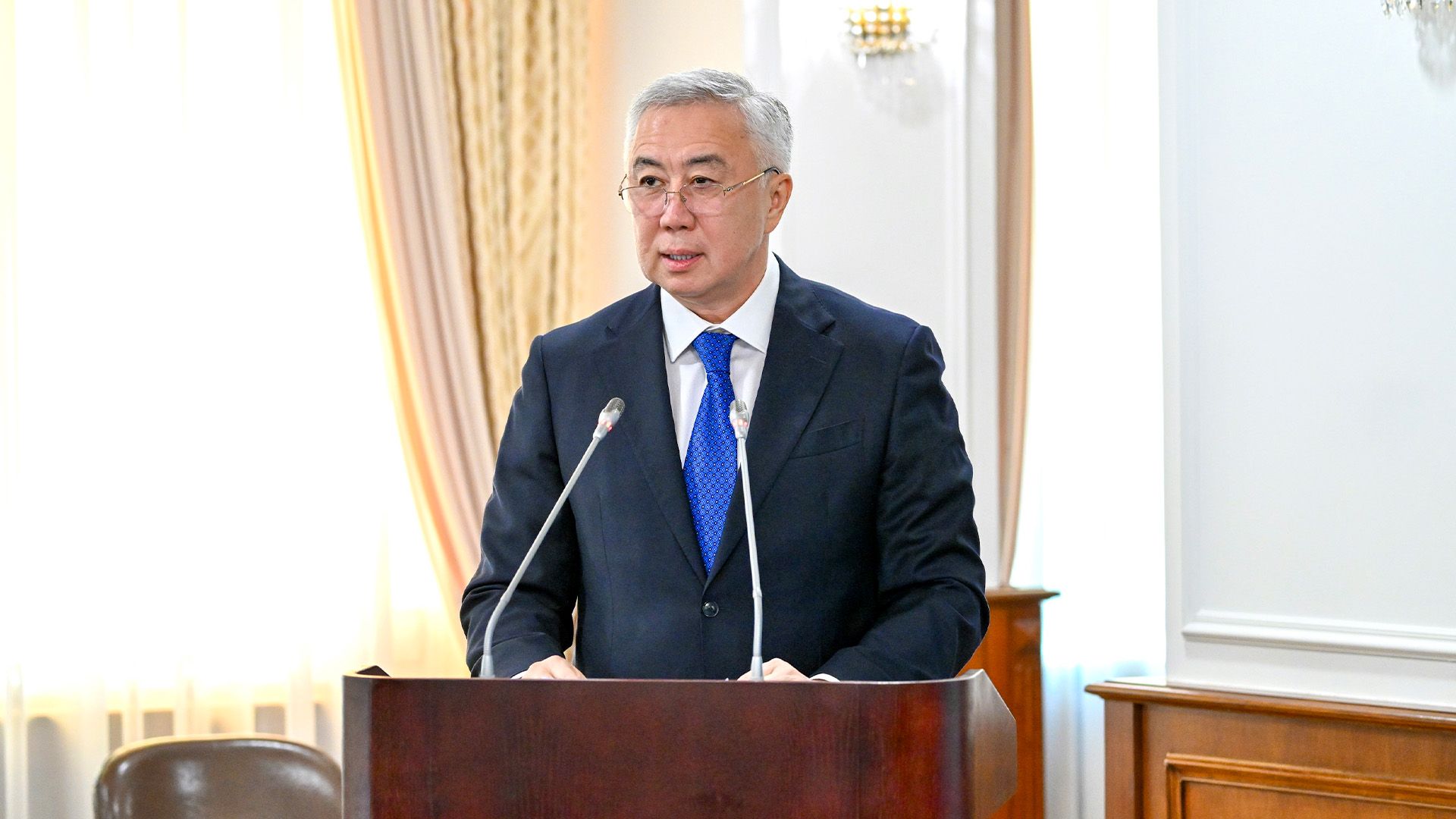
At the Government session chaired by Prime Minister Olzhas Bektenov, the results of the socio-economic development of the Republic of Kazakhstan for the first nine months of the current year were reviewed. Deputy Prime Minister – Minister of National Economy Serik Zhumangarin delivered the report.
As the Deputy Prime Minister reported, the economy is developing this year under a number of constraining factors. First, there is a reduction in oil production and a negative contribution of the oil sector to GDP growth. According to the results of 9 months of the current year, oil production decreased by 8.3% and amounted to 69.4 million tons. Second, the strengthening of the tenge exerts a constraining effect on the revenues of export-oriented industries and the budget. Third, the slowdown in consumer lending growth is restraining consumer demand. Year-on-year growth in consumer loans declined from 26.4% in August 2025 to 10.4% in August 2026.
“Despite these factors, Kazakhstan's economy continues to grow and demonstrates positive dynamics. Based on the results of the nine months of the current year, economic growth reached 4.2%. Economic growth was supported by the non-resource sector, which is estimated to have grown by 5.4%. Among sectors, the highest growth rates were demonstrated by construction, manufacturing, transport services, and trade. The combined contribution of these sectors to GDP growth is more than 75%. Positive dynamics also persist in agriculture and communication services,” Serik Zhumangarin emphasized.
He also noted that the dynamics of the indicators point to a gradual transformation of the economic structure. Thanks to step-by-step diversification, the share of oil production in the GDP structure at the end of 2025 decreased to 7.8%. Following the results of the first half of 2026, the share of manufacturing increased to 14.1%, while the share of mining made up 12.4%.
Investment continues to be the driver of growth. In January–September of the current year, fixed capital investments amounted to 16.1 trillion tenge and grew by 7%. A distinctive feature is that the main growth factor for investments is private investment, which increased by 18.2%. The most significant investment growth was noted in manufacturing — by 40.1%, construction — by 32%, information and communications — by 29.2%, healthcare — by 20.4%, and agriculture — by 9.1%. The structure of fixed capital investment is changing: the share of private investment reached 85.7%. Gross foreign direct investment inflow in the first half of the current year reached $9.4 billion.
Due to an increase in the trade balance against the backdrop of outstripping export growth in the first half of 2026, the current account of the balance of payments showed a surplus of $2.4 billion. The trade surplus amounted to $16.2 billion, more than doubling compared to the same period last year. Following the results of eight months of 2026, the trade balance improved to $17.8 billion. Exports of goods amounted to $60.4 billion, while imports of goods totaled $42.6 billion. It was particularly highlighted that against the background of high economic activity, imports of intermediate goods grew by 13.8% and investment goods by 7.9%. At the same time, imports of non-food consumer goods decreased by 11.2%. The positive dynamics of the trade balance creates prerequisites for improving the current account state and reducing the budget deficit.
Manufacturing remains one of the key drivers of growth. Production growth reached 8.6%, which is 0.2 percentage points higher than the indicator in January–August of this year. Growth in manufacturing was ensured by a 22.8% increase in engineering output, including 29.9% in automotive manufacturing and 20.7% in electrical equipment production. Food production rose by 13.8%, fabricated metal products by 34.8%, pharmaceutical products by 30.9%, chemical industry output by 23.4%, rubber and plastic products by 18.1%, and construction materials by 5.9%. The physical volume index (PVI) of metallurgy grew from 97.3% in January–August to 98.2%, with growth in ferrous metallurgy securing positive territory at 2.8%. To achieve positive dynamics, measures have been developed and are being adopted to supply large domestic enterprises of the mining and metallurgical complex with raw materials and ensure their capacity utilization.
A proactive policy of economic growth continues. To fund priority sectors, 540 billion tenge was allocated from the budget to the "Baiterek" Holding. By attracting market financing, the Holding funded projects worth 6 trillion tenge. Among the most iconic projects are:
- Construction of a potassium fertilizer production plant (QAZAQ KALIUM LTD.);
- Construction of a nitrogen fertilizer production plant (KAZAZOT PRIME LLP);
- Construction of an aluminum coil production plant (KAZCOILPRO LLP);
- Construction of a deep grain processing plant (KAZAK PROTEIN LLP);
- Construction of a brick factory (KirZavod LLP).
The PVI of the mining industry stood at 95.7%. In January–September of this year, 69.4 million tons of oil were produced, which is 6.3 million tons or 8.3% lower than last year's figure. The PVI of gas production made up 91.9%. Mining of other minerals increased by 12.7%, coal by 6.6%, and metal ores by 1.6%.
The construction sector demonstrates high growth rates. The volume of construction work increased by 11.5%. Growth was recorded in 17 regions, with the highest growth noted in the Ulytau, Kyzylorda, Atyrau, and Pavlodar regions, as well as the city of Shymkent. A decline in construction volumes is observed in the Zhetysu, Karaganda, and North Kazakhstan regions. A total of 13.2 million m² of housing was commissioned, which is 2.7% more than in the corresponding period of last year. The highest indicators are observed in the Almaty, Mangystau, Pavlodar, and Zhetysu regions.
Agriculture and the agro-industrial complex (AIC) are becoming one of the economic drivers, accompanying growth with an enhancement of agricultural product processing. Production growth in agriculture accelerated from 5.2% in January–August of this year to 5.8%. In the current year, the total harvested area was brought to 24.2 million hectares, which is 600 thousand hectares more compared to last year. Since the beginning of the year, 23 million tons of grain and 3.7 million tons of oilseeds have been harvested. At the same time, the grain crop area was reduced by 420 thousand to 15.6 million hectares, while the oilseed area was increased by 1.2 million to 5.2 million hectares. Export volumes are growing and the product range supplied abroad is expanding: in January–July of this year, AIC product exports amounted to $4.9 billion, which is 33% higher than in the same period last year.
“The Government, together with the National Bank, continues to implement measures to reduce inflation. Thanks to the measures taken, inflation continues to consistently slow down: as of September of the current year, annual inflation slowed to 9.3% against 9.8% in August. The main contribution to the inflation slowdown was made by a decrease in the rate of food price growth (in September, food prices decreased by 0.1% month-on-month). Containing inflation is one of the directions of the Government's work to raise real incomes of the population: against the background of slowing inflation, in the second quarter of this year, real monetary incomes of the population increased by 0.7% against 0.1% in the first quarter,” Serik Zhumangarin emphasized.
Tax reform became a key factor in strengthening the budget revenue base, providing a significant increase in receipts even amid current challenges. Based on the results of the nine months of this year, tax revenues to the state budget reached 19.3 trillion tenge, an increase of 3 trillion tenge, or 18.2%, compared to the same period last year. VAT served as the main growth driver, with receipts growing by 37.3%, including a 54.1% increase for domestically produced goods and a 23.9% increase for imports.
Entrepreneurial activity in the country maintains positive dynamics and demonstrates resilience to external and internal economic changes. A structural reorganization of business is observed: the total number of business entities, including self-employed individuals, increased by 32.5%, reaching 3.2 million. The number of entrepreneurs operating under the general tax regime as VAT payers grew by 28%.
Conditions have been created for citizens to exit the shadow economy: 981 thousand people registered as self-employed, of whom 807 thousand registered with the tax authorities for the first time. During the nine months of 2026, 277 thousand new business entities were registered, including 34.7 thousand legal entities and 242.3 thousand individual entrepreneurs (IEs), while 19.7 thousand legal entities and 356 thousand IEs were deregistered.
As Serik Zhumangarin noted, the termination of IE registration does not imply the actual cessation of economic activity: out of the 356 thousand closed IEs, 42.6% had no income in 2025, and 20.8% transitioned to self-employed status, continuing their activity. Thus, a health recovery of the business structure and a transition of entrepreneurs to more suitable tax regimes is taking place.