 В Атырау +21.3
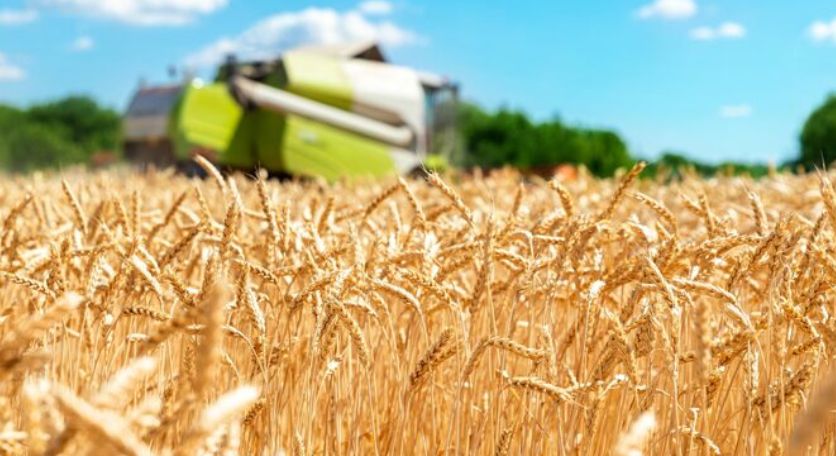
The harvesting campaign in Kazakhstan is nearing completion: 23 million tons of grain have been harvested, and 96% of the area under grain and leguminous crops has been cleared. Oilseed production is demonstrating high results: to date, 2.5 times more oilseeds have been harvested than in the same period last year. Deputy Minister of Agriculture Azat Sultanov reported this at the session of the Government of the Republic of Kazakhstan.
In the 9 months of the current year, the gross agricultural output increased by 5.8% and reached 7.3 trillion tenge (January–September 2025 – 5.4%, 6.5 trillion tenge).
“This growth was ensured by an increase in production volumes in crop production by 7.6% (4 trillion tenge) and in livestock farming by 3.5% (3.2 trillion tenge),” Azat Sultanov noted.
By region, growth rates higher than the national average were achieved in 5 regions: Kostanay — 111.4%, North Kazakhstan — 110.6%, Akmola — 107.3%, Turkestan, and Pavlodar regions — 106.8%.
Based on the results of the 9 months of 2026, positive results were achieved in the crop production sector. To date, 23 million tons of grain have been threshed.
Despite challenging climatic conditions during the growing season and a systematic reduction in wheat area by 1.8 million hectares, the gross grain harvest is projected to exceed the long-term average level.
“The oilseed harvest is gaining good momentum. To date, 3.7 million tons of oilseeds have been threshed, which is 2.5 times more than last year (1.4 million tons). Based on the results of the harvest, a record oilseed yield is expected — over 5 million tons,” the Deputy Minister emphasized.
High performance was also achieved in vegetable crops. To date, 3.1 million tons of vegetables, 2.9 million tons of potatoes, and about 2.4 million tons of gourds and melons have been harvested.
In the current year, the total harvested area of grain and leguminous crops stands at 15.6 million hectares. To date, 96% of the area has been harvested, with an average yield of 15.2 centners/ha. In the main grain-growing regions, the average yield is: 17 centners/ha in North Kazakhstan region, 14 centners/ha in Akmola region, and 14.2 centners/ha in Kostanay region.
“Along with production volumes, the quality of the harvested grain, ensuring its preservation, and timely sale are of particular importance. High grain quality is noted this year: over 72.4% of the wheat delivered to elevators belongs to class three. Moreover, over 47% has a gluten content exceeding 28%. In certain regions, quality indicators are significantly higher. For example, in the Akmola region, the share of class three wheat reaches 90%, and the share of the Hi-Pro category stands at 70%,” the Deputy Minister emphasized.
The positive dynamics of new crop grain exports were highlighted separately. At the end of September this year, exports amounted to 1.1 million tons, which is 13% higher than in the same period in 2025. In this regard, ensuring the uninterrupted operation of grain receiving enterprises, timely shipment of grain, and effective utilization of existing logistics capacities are of key importance.
This year, financing for spring field and harvesting operations is planned to reach 750 billion tenge. At the same time, the volume of preferential leasing will be brought to 350 billion tenge, with the renewal of the agricultural machinery fleet increasing from 6.5% to 8% and its wear-and-tear reducing from 80% to 65%.
The support provided to farmers is reflected in compliance with agrotechnologies and increased sector productivity. Thus, the volume of fertilizer application this year was increased from 1.8 to 2.1 million tons, with over 90% of the plan already applied to date, and the share of elite seeds was brought to 12.4%.
The expansion of water-saving technology applications continues. In the current year, an additional 160 thousand hectares of land were introduced.
The implementation of the Comprehensive Plan for Livestock Development continues, with its measures creating economic incentives to expand production and increase livestock productivity. A total of 150 billion tenge is provided for financing under preferential loan products “Igilik”, “Bereke”, and “Zhailau”, of which 63.5 billion has been allocated to date.
Since the beginning of the year, over 9 thousand head of breeding cattle have been imported. Another 16 thousand head of cattle and 7 thousand head of small cattle are at the selection and quarantine stage.
“In addition, the implementation of the program replicating the experience of the North Kazakhstan Region at 2.5% per annum continues, under which 99 projects for the construction and expansion of dairy farms with a total capacity of around 600 thousand tons of milk were financed. Of these, 71 farms with a capacity of over 460 thousand tons have been commissioned to date,” the Deputy Minister added.
Additional production growth reserves are associated with new dairy farms reaching design capacity and the development of feedlots. By the end of the year, capacity utilization of the commissioned facilities is planned to reach 70% of design capacity.
To increase meat production, a preferential lending program for feedlots is being implemented to replenish working capital. In the current year, 73 applications worth 52.2 billion tenge have been funded.
“Food production volume reached 3.2 trillion tenge with a growth of 13.8% (January–September 2025 – 9.8%, 2.8 trillion tenge). During the specified period, flour production increased by 13.9%, vegetable oil by 25.2%, ice cream by 51.7%, chocolate and sugar confectionery by 10.4%, and cheese and cottage cheese by 9.3%,” Azat Sultanov noted.
Since the beginning of the year, the acquisition of working capital for over 200 enterprises was financed in the amount of 96 billion tenge.
Based on the results of the current year, gross industry output is projected to grow by 6%, food products by 9.5%, and beverage production by 10.5%.