 В Атырау +16.8
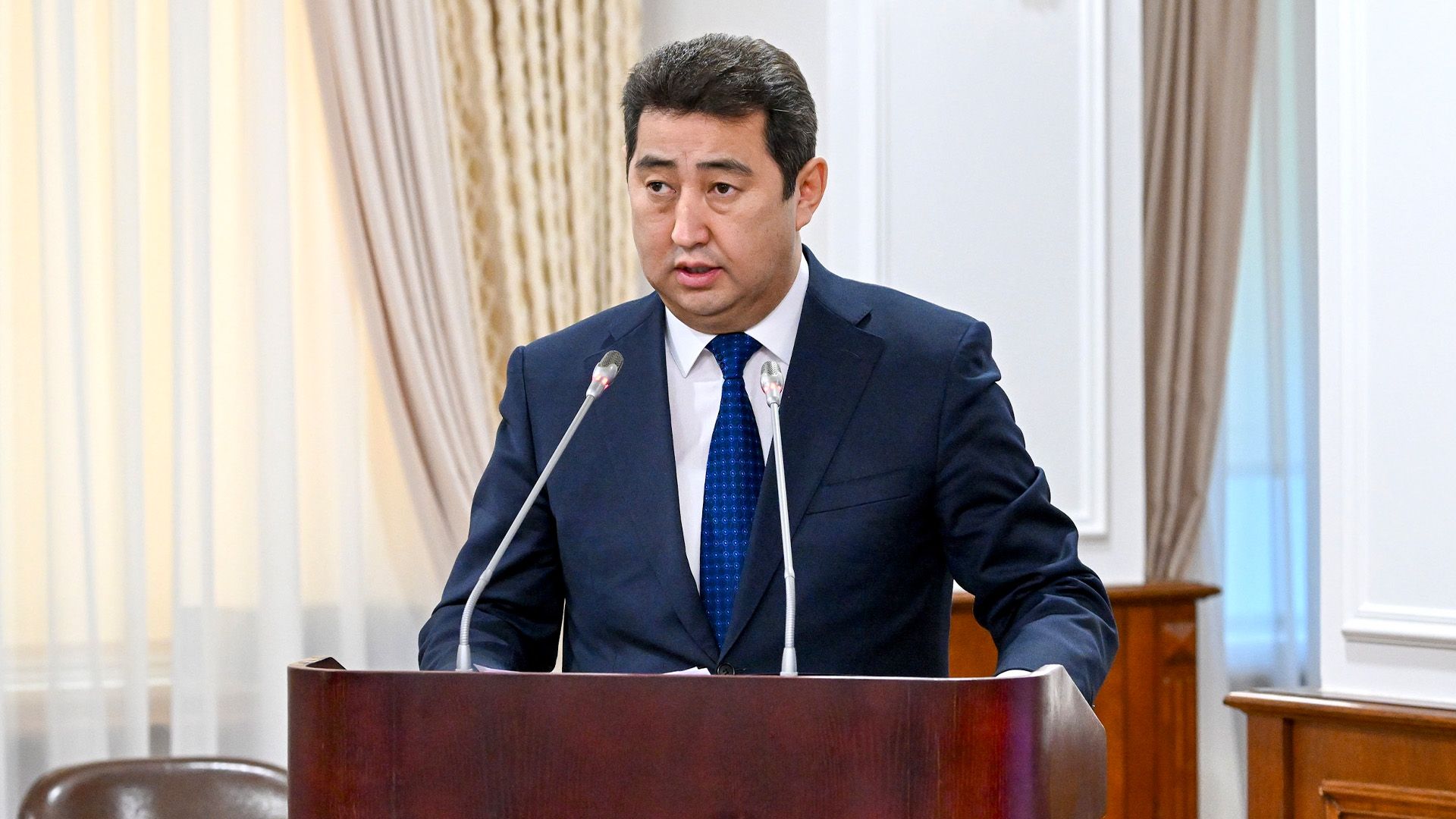
Minister of Agriculture Aidarbek Saparov reported at the Government session on measures being taken to expand and deepen the processing of agricultural products,reports Primeminister.kz.
He noted that the agricultural processing sector is currently demonstrating a steady and dynamic development trajectory. At the end of 2025, food production totaled 3.9 trillion tenge, which is 8.1% higher than in 2024; fixed capital investment doubled to reach 389.4 billion tenge; and in the first 11 months of 2025, exports of processed products amounted to $3.2 billion, 33.8% higher than during the same period of the previous year.
“In addition, the share of processed products in total agro-industrial exports now stands at 52%. All of this is the result of systematic work aimed at diversifying production and increasing the share of high value-added products,” Aidarbek Saparov said.
In crop production, consistent diversification of cultivated areas is underway, shifting toward high-margin and globally востребованные crops. Oilseeds have become the main profitability driver in crop farming. In 2025, oilseed harvest reached a record 4.9 million tons, up 48% year-on-year. Sunflower production increased by 39%, and flax by 77%.
Preferential loans at 5% per annum for terms of 12 to 15 months are provided for fieldwork, with a repayment rate of approximately 99%.
“The next important step is processing. In this regard, systematic work is being carried out to expand the capacity of oil processing plants and modernize their technology,” Aidarbek Saparov said.
It was noted that in 2024–2025, four major projects worth 58 billion tenge were launched with a total capacity of about 1 million tons. In East Kazakhstan Region, a production line for an innovative product—lecithin—has been commissioned. In North Kazakhstan Region, lecithin production is also planned to launch this year.
In addition, 13 projects worth 94 billion tenge are planned over the next three years. Thanks to these measures, exports of finished products have increased, with sunflower oil exports reaching 600,000 tons, placing Kazakhstan eighth globally in oil exports. As an example of a niche product, lentils were highlighted. Previously, Kazakhstan exported lentils to Türkiye as raw material and re-imported the same lentils as finished groats at a higher price.
Today, thanks to the launch of lentil processing and packaging facilities such as Kaizen in Kostanay Region, and Garanti Export and Anka Group in Akmola Region, domestic demand is met and finished products are exported. Kazakhstan now ranks sixth globally in lentil exports and has significant potential for further development.
Overall, a record harvest of legumes amounting to 1 million tons was achieved this year, 56% more than the previous year. Legumes also enrich soil with nitrogen and improve yields of subsequent crops. In this regard, diversification of cultivated areas will continue.
“In addition, deep grain processing is developing. Currently, three enterprises with a combined capacity of over 500,000 tons are operating, producing gluten, bioethanol, and starch products. Over the next three years, six investment projects worth 1.9 trillion tenge are planned. The product range will be expanded to include amino acids such as glutamate, threonine, leucine, and lysine. Projects will be implemented in Turkistan, Zhambyl, Akmola, and Kostanay Regions, as well as in Astana,” Aidarbek Saparov specified.
The Minister also addressed livestock development. Currently, 210 meat processing enterprises operate in the country, including full-cycle facilities such as Kaip Ata, KazBeef, Bizhan, Kublej, and EMC Agro. Eleven projects worth 41.2 billion tenge are underway, adding an additional 50,000 tons of capacity. The largest among them are Eurasia Agro Semey in Abai Region and TRZ Agro in Zhambyl Region.
Implementation of these projects is expected to expand product range, increase processing plant utilization, and strengthen export potential. The dairy processing sector is also experiencing steady growth. There are currently 180 dairy processing enterprises operating in the country. In 2025, several major projects were launched, including:
- Eurasian Milk — a facility producing 13,000 tons of condensed milk;
- Zenchenko & K — a project producing 18,700 tons of dairy products.
In addition, 12 investment projects worth 41 billion tenge are being implemented, adding 165,000 tons of new processing capacity. These projects will ensure domestic supply of a wide range of dairy products and expand exports.
Gradual restoration and modernization of leather and wool processing facilities are also underway. In 2025, major projects were commissioned:
- In Aktobe — KazFeltek, processing 2,200 tons of wool;
- In Akmola Region — Agro Protein, producing 2,400 tons of feed additives.
To further develop the sector, eight investment projects worth 9.9 billion tenge are being implemented, adding 1.3 million tons of processing capacity. Among them are Taraz Gelatin, ECO Club, Iskefe Holding, and KazGelatin, focused on deep processing of leather and by-products. Their implementation will increase production of food-grade gelatin and feed additives while reducing raw material costs.
In addition to traditional agriculture, new agri-business areas are emerging. A modern full-cycle mushroom farm, ECO Glade, has been launched with investments of approximately 11.3 billion tenge. Located in the Kyzylzhar Special Economic Zone, the facility produces and processes up to 2,400 tons of champignons annually, significantly reducing imports of mushroom products.
“Overall, following the Head of State’s instructions, the volume of preferential lending in the agro-industrial complex has increased significantly over the past two years. Many projects were initiated and implemented under the program replicating the North Kazakhstan Region’s experience. This program enables modernization, automation, and the introduction of artificial intelligence technologies,” Aidarbek Saparov explained.
It was noted that farmers are raising the issue of financing from the beginning of the year. In this regard, regional administrations must prioritize import substitution and financing of efficient projects with strong export potential.
In conclusion, the Minister emphasized that systemic measures are already yielding positive economic results. Exports of flour confectionery products doubled, pasta increased by 1.2 times, margarine by 3.5 times, and ice cream exports by 5.7 times. Exports of deep grain processing products—bioethanol, gluten, and starch—also increased, clearly demonstrating the high potential of high value-added products.
Overall, since 2020, exports of processed products have increased 3.2 times to reach $3.2 billion. The target for the current year is $3.9 billion. Thus, the systemic measures taken not only strengthen the country’s food security but also enhance the competitiveness of Kazakhstan’s agro-industrial complex in foreign markets.