 В Атырау +11.4
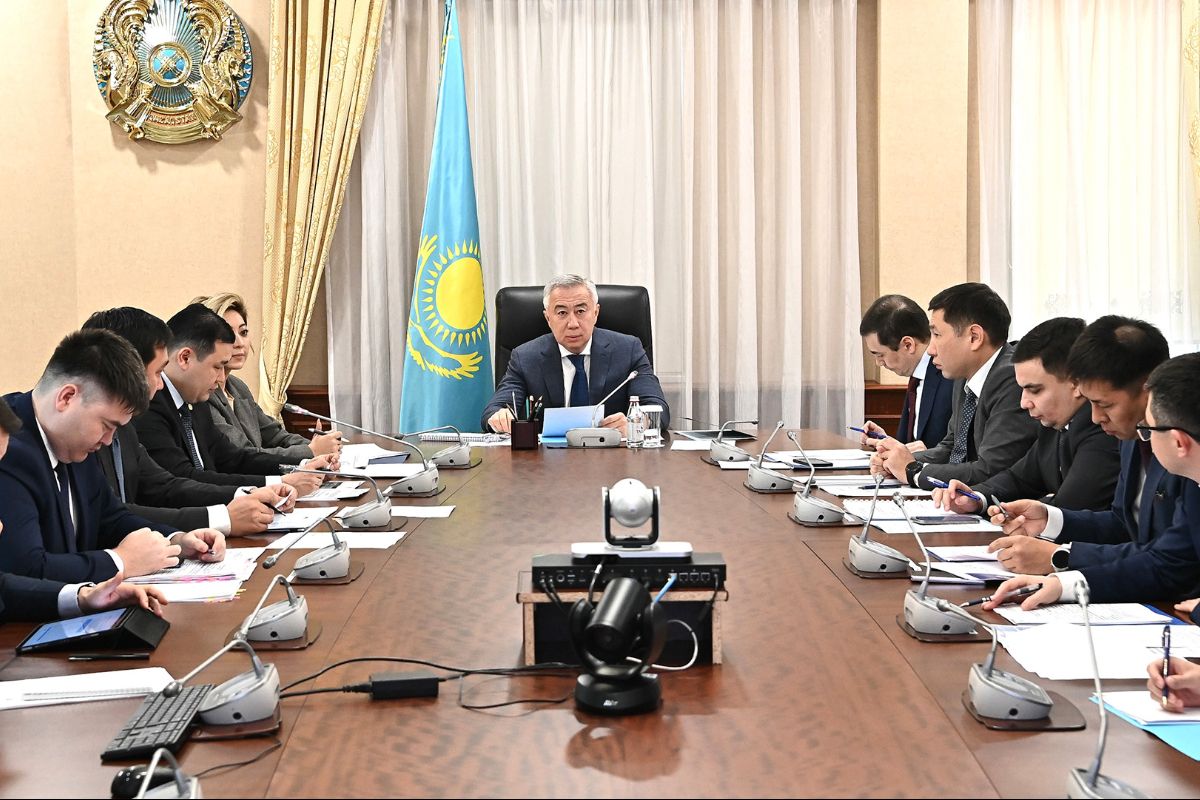
At a meeting of the headquarters on ensuring economic growth chaired by Deputy Prime Minister – Minister of National Economy Serik Zhumangarin, preliminary results of economic growth in key sectors for nine months were reviewed, reports primeminister.kz.
Agriculture
For 8 months of 2025, gross output increased by 3.4% and amounted to about 3.6 trillion tenge. The forecast for 9 months is +2.3%.
Growth was ensured by animal husbandry (+3.2%, 2.26 trillion tenge) and crop production (+4%, 1.25 trillion tenge). Another round of growth is expected in October due to the gross harvest of grains, oilseeds, and other crops.
Processing and Food Industry
Food production for 8 months grew by 10.1% (to 2.5 trillion tenge), beverages – by 7.1% (813 billion tenge).
Growth was driven by increased production of sugar (+24%, up to 122.8 thousand tons), canned meat (+29.7%, up to 5.8 thousand tons), vegetable oil (+27%, up to 595 thousand tons), sausage products (+8.8%, up to 51.2 thousand tons), and butter (+15%, up to 25.2 thousand tons).
For 9 months, food production is expected to grow by 10.9%, beverages – by 7%.
Mining Industry
For January–August, 67.4 million tons of oil were produced (+13.4% compared to the same period in 2024). Significant oil production growth was recorded at Tengiz (+26.83 million tons, or +42% compared to 2024). At Karachaganak, 8.38 million tons were produced (+4.6%). At Kashagan, production decreased by 1.9% to 12.16 million tons due to maintenance work.
Forecast for 9 months: oil production – 75.6 million tons (+13%), gas – 51.6 billion m³ (+17%). The 2025 plan for gas is 62.8 billion m³ (+6.4%).
Oil refining for 8 months amounted to 12.2 million tons (+5.6%), by the end of September it is expected to reach 14 million tons (+5.9%). Petroleum product output for 8 months – 10.2 million tons (+8.7%), for the year – 13.7 million tons.
Petrochemicals: 418.9 thousand tons (+5%), forecast for the year – 590 thousand tons (+9.3%).
Trade
For 8 months, trade grew by 8.9% and amounted to 44.9 trillion tenge. In monetary terms, this is 14% higher than a year earlier. The main contribution was made by Almaty (15.5 trillion tenge), Astana (6.6 trillion), Atyrau region (4.8 trillion), Karaganda region (2.8 trillion), and Shymkent (2.2 trillion).
Growth was mainly ensured by wholesale trade (+3.5 trillion tenge, 109.8% compared to last year). In its structure, the share of non-food products increased from 80% to 82% (oil and petroleum products, pharmaceuticals, metallurgy, equipment, automobiles). The share of food products amounted to 18% (grain, oils and fats, food products, beverages).
In retail trade, the structure remained unchanged: 68% accounted for non-food products (+1.4 trillion), 32% for food products (+0.6 trillion).
Transport and Logistics
The transport sector, as a litmus test of the economy, shows growth in most indicators. For January–August, the volume of services in transport and warehousing grew by 21.5%, forecast for 9 months – 21.6%.
Growth is driven by increased freight transport in the mining and metallurgical, oil and gas, agricultural, construction, and trade sectors.
Passenger transport for 9 months is expected to be +7.8% (1.36 billion people).
Among shippers, growth was shown by: ERG (+3%), Bogatyr Komir (+2%), refineries (+3%), Qarmet (+11%), Kaz Minerals (+1%).
Manufacturing Industry
Growth in January–August amounted to 6.1%. Positive dynamics persist in metallurgy, mechanical engineering, chemical, light industry, production of building materials, rubber and plastic products, and furniture.
Construction
For January–August, works worth 4.8 trillion tenge were completed (physical volume index 118.1%). The forecast for 9 months is +17.7%.
Conclusion
Following the meeting of the headquarters, Serik Zhumangarin emphasized that the key task of all sectors for the near future is to actively engage in microeconomics, that is, to address the problems of each enterprise in the sector in order to prevent a slowdown in growth rates.